Common Scattered Point Dip (CSPD)
It is known that conventional seismic reflection imaging technology has progressed from the 2D post-stack to the 3D pre-stack domain, dropping out diffractions from interpretation workflows. Thus, the application of 3D pre-stack migration has become routine. In other words, diffractions are not commonly used in interpretation workflows as seismic processing specialists generally regard diffraction energy as a form of coherent noise. But, with the emerging technology of diffraction imaging, characterizing small-scale faults and reservoir heterogeneities is gaining momentum, the understanding of seismic diffraction from first principles is gaining relevance for seismic interpretation and processing specialists.
Scope of CSPD technology:
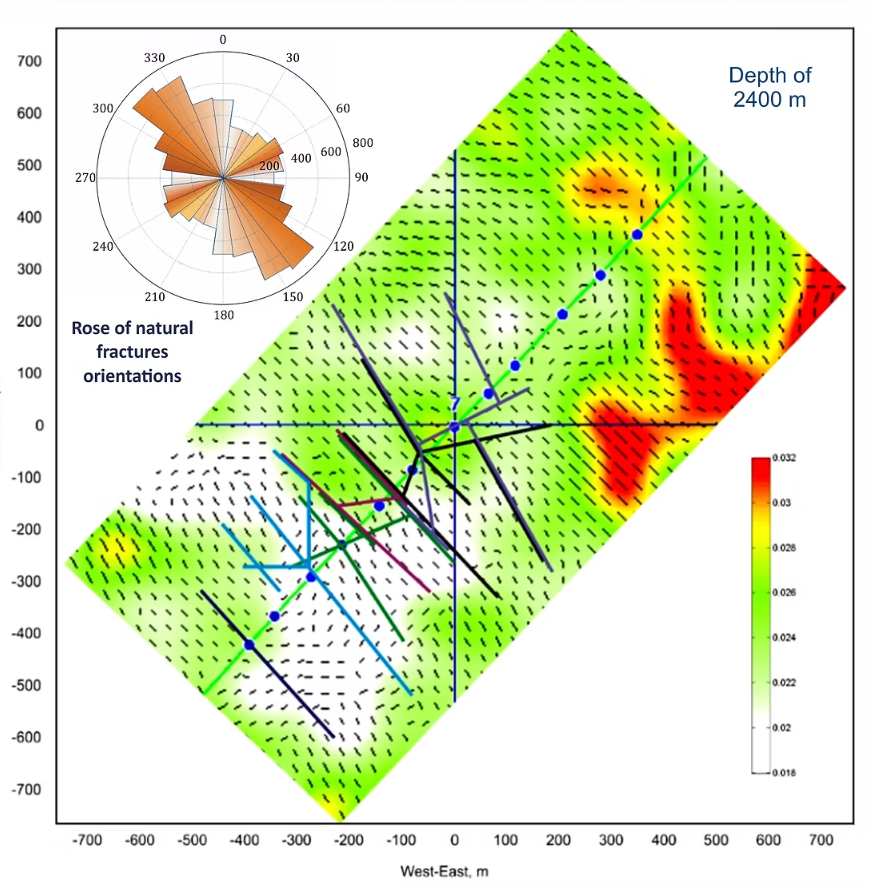
Fractured-cavernous reservoirs identification
Detecting impermeable faults and open fracturing zones
Delineating granite intrusion
Geohazard prediction for drilling
Geosteering for horizontal drilling. Smart drilling

Comments